(CNN) – There was lively debate among Business 360 readers on question posed by Friday’s post China slowdown bigger worry than eurozone?
The heart of Friday’s post was the conversation CNN’s Richard Quest had with Jim O’Neill, chairman of asset management for Goldman Sachs, that the slowdown of developing economies such as China was more worrisome than the eurozone crisis.
Many of the dozens of comments from Business 360 readers can be summed up in two words: What slowdown?
Jon B: “I'm an American and I've been living in China for 5 years. Yes, businesses are hurting and prices are rising, but China's people are only getting richer. Their economy is doing just fine for right now. Maybe within the next five to 10 years China will resemble the U.S. and its current struggle, but for now they are full steam ahead. There aren't many icebergs big enough to cripple this boat just yet.â€
Marco Hsiao: “China (Mainland China + ROC Taiwan + Hong Kong + Macau) are all moving to more prosperity. Singapore has surpassed the U.S. on per capita income, and the gap is expanding. Their ancestors are from South China.â€
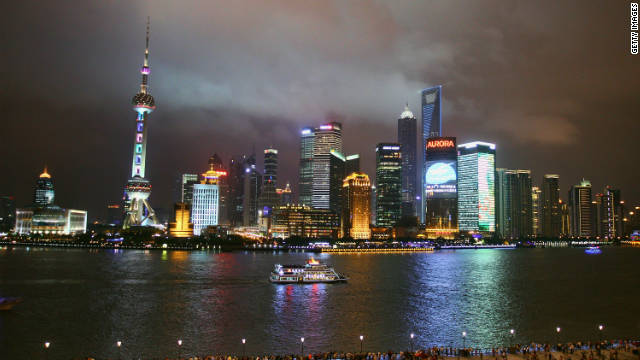
Marie: “I was recently in China in Shanghai and Guangzhou. Both cities looked modern, all cars on the roads were new. McDonalds (sadly) was full and the meals were around $5. Nice new condos and houses were being built. I would say people there have more money than ever and the cities were very modern. No outward signs of collapse yet.
Other readers pointed out the one-party rule in China, its impingement on free expression as well as its command-economy ability to run by edict rather than through elected officials.
Migen Bora: “We must not forget that China is a dictatorship state. People there are not free (they don`t even know how freedom is like) … Now, China may have some economic results, but they come from underpaid workforce and by not having the costs that Western countries have (health care, RD etc). It cannot hold forever, one day it will collapse (like the Soviet Union).â€
Srtcruz: “The Chinese model actually has one very distinct advantage versus the west – central control. That model will be better at resolving a crisis since the debates and politics are kept within a smaller core. They will not have the same political issues as the ‘Debt Ceiling’ in the US or the current political mess in the European Union – in-short they have speed and decisiveness.
“Can you imagine if both issues arise in a country four times the size of the United States? Oh right, India.â€
With the President Hu Jintao and Premier Wen Jiabao both in their final year of office, readers pointed out this could be a year of turbulence or of greater Beijing effort to avoid a hard economic landing.
Godfather: “Deng Xiaoping – a period of economic growth; Jiang Zeming – a period of economic growth; Hu Jintao – a period of economic growth. The next President to be – do you think he will let China into a period of economic recession? And let his name be tainted in history? I bet the next man in power will continue to lead China into continual prosperity and god economic progress.â€
Jun Sorioso: “I expect the Chinese leadership to be under a lot of pressure to window dress Chinese economic performance one way or another at least until the leadership transfer late this year. In other words conditions are probably worse than what we are allowed to see.â€
Saorise72: “There are many problems in China besides the manufacturing and export issues. One issue is the growing amount of debt. Some cities like Wuhan are over 900 million in debt. There are the issues of illegal banking and trading in China, some of which American regulators just picked up on. There was also a huge speculation on housing the past 10 years that has gotten out of hand.
“Money is leaving China, many ex-government officials and their families have also left China. There is also a number of accounting problems, even with recent numbers posted about GDP growth. So when the new leadership comes into office they have many challenges ahead of them. With growing discontent and food prices they better find some solutions to chill out the inflation, cut speculation, increase accounting regulations, reform the banks, get rid of illegal banking, stop government graft – much like South Korea had to do in the 90's.â€
Compiled by the CNN.com International staff. Some comments edited for length or clarity.
Source & Image : CNN Business

No comments:
Post a Comment